
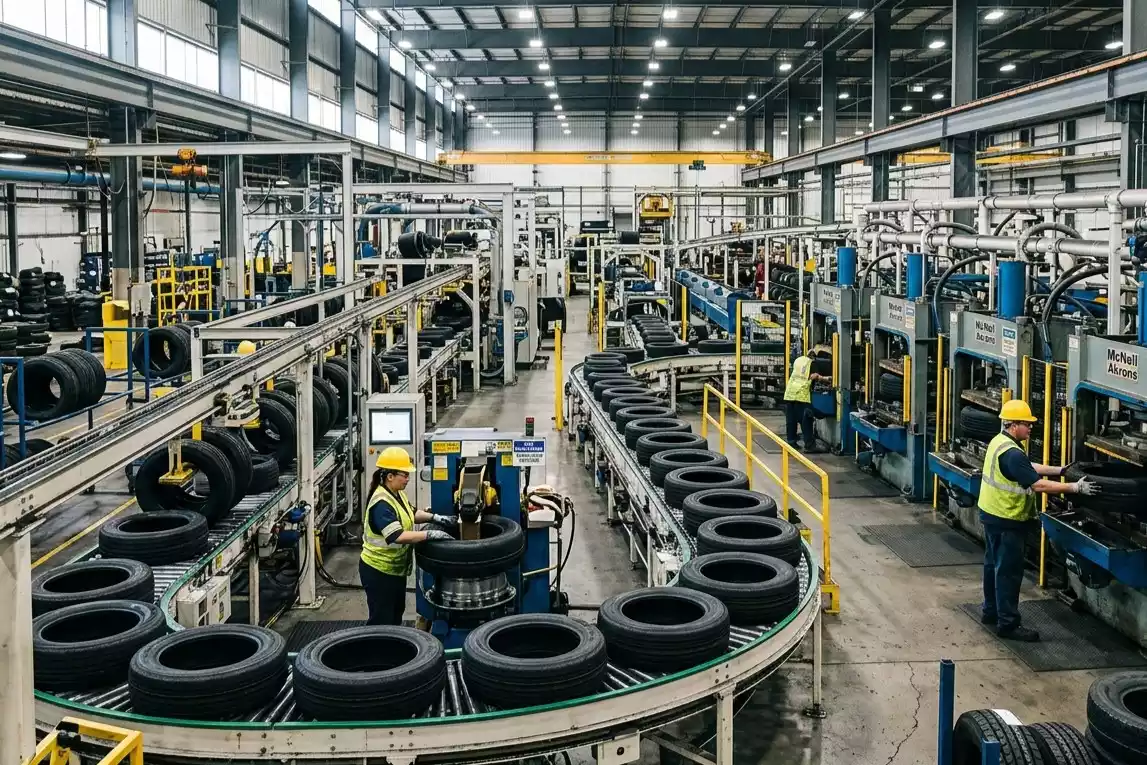
Digital transformation sounds straightforward on paper. Replace manual processes with automated systems, connect equipment to a centralized platform, collect better data, and use that information to improve productivity. In a tire manufacturing plant, however, the reality is rarely that simple.
The biggest obstacle may not be the technology. It may be the culture surrounding the technology.
The Cultural Bottleneck Behind Digital Transformation
Tire plants operate in environments where uptime matters. Production equipment is complex, interconnected, and often difficult to take offline. Maintenance teams are under constant pressure to keep lines running, which can make a major automation project feel like an unnecessary risk.
There is also a natural concern that new technology could disrupt established workflows. A maintenance technician who has successfully diagnosed a machine for 20 years may reasonably question whether a new monitoring system actually understands the equipment better than they do.
The answer is that it does not have to.
The most successful automation upgrades do not attempt to replace the knowledge of experienced employees. They use technology to capture, organize, and extend that knowledge.
Legacy Systems Make the Problem Harder
Many tire manufacturing facilities have accumulated equipment and control systems over decades. New machinery may operate alongside older PLCs, sensors, HMIs, and other systems that were never designed to communicate with modern digital platforms.
Replacing everything at once is rarely practical. It is expensive, disruptive, and potentially risky. More importantly, a plant may not need to replace everything to achieve meaningful improvements.
A better approach is to identify where legacy equipment creates the greatest operational limitations and introduce technology strategically. Modern sensors, data collection systems, controls upgrades, and automation solutions can often be integrated into existing processes rather than requiring a complete plant overhaul.
Tribal Knowledge Should Be Part of the Upgrade
One of the most overlooked assets in a manufacturing facility is the knowledge held by its experienced maintenance and operations personnel.
A technician might know that a particular conveyor motor tends to overheat after extended operation. An operator might recognize a subtle change in equipment behavior before a failure occurs. Another employee may know the workaround that keeps an older machine running when its original components are no longer readily available.
If that knowledge exists only in people’s heads, the plant is vulnerable. Retirement, turnover, reassignment, or even an unexpected absence can take critical expertise off the floor.
Digital transformation creates an opportunity to preserve that knowledge. Maintenance teams can help identify failure patterns, define important machine conditions, establish alarm thresholds, and determine which data is actually useful. That information can then become part of a more systematic monitoring and automation strategy.
Start Small, but Start Where It Matters
A successful automation rollout does not have to begin with a plant-wide transformation. In fact, starting too big can create unnecessary resistance.
Instead, identify a specific process or piece of equipment where automation can solve a clearly defined problem. That might mean reducing repetitive manual handling, improving material flow, collecting equipment data, reducing unplanned downtime, or eliminating a known bottleneck.
A focused project gives the plant an opportunity to establish measurable results without asking employees to accept an entirely new operating model overnight.
Once the benefits become visible, the organization has something more persuasive than a presentation about digital transformation: proof.
Bring Maintenance Into the Process Early
Maintenance teams should not be brought in after the technology has already been selected. They should be involved from the beginning.
Ask maintenance personnel what equipment causes the most problems. Find out which failures are difficult to predict. Identify processes that require frequent manual intervention. Determine where existing controls create limitations. Most importantly, ask experienced technicians what they would change if they could.
This creates two benefits. First, the resulting automation solution is more likely to address an actual operational problem. Second, employees become participants in the transformation rather than recipients of a technology decision made somewhere else. That distinction can have a major impact on ease of adoption.
Use a Phased Rollout Strategy
A practical digital transformation strategy for a tire plant can follow several stages.
1. Assess the current operation. Identify legacy equipment, manual processes, recurring maintenance problems, bottlenecks, and opportunities for automation.
2. Document critical knowledge. Work directly with operators, maintenance personnel, and engineers to capture equipment behavior, troubleshooting procedures, and operational requirements.
3. Prioritize high-value opportunities. Focus on projects that can produce measurable improvements in uptime, throughput, safety, labor efficiency, or maintenance visibility.
4. Pilot the technology. Introduce the solution in a controlled area rather than attempting a facility-wide deployment.
5. Measure the results. Establish baseline performance before the project and compare it against results afterward. Demonstrating ROI makes the case for the next phase much easier.
6. Train and refine. Give employees hands-on experience and use their feedback to improve the system before expanding it.
7. Scale strategically. Apply proven solutions to additional equipment, lines, or processes while continuing to account for differences between systems.
This approach reduces risk while allowing the organization to build confidence with each successful implementation.
Ready to Modernize Your Material Handling Operation?
The right automation strategy starts with understanding the equipment, processes, and people already driving your operation. UMD Automated Systems can help manufacturers evaluate opportunities, develop practical automation solutions, and integrate new technology with existing systems.
When modernization is approached as an evolution rather than an overnight replacement, plants can improve performance while preserving the knowledge that keeps their operations running.
Contact UMD Automated Systems today to discuss your automation goals and discover how we can help modernize your material handling operation.